


How to Choose a Managed IT Services Provider in San Jose
July 1, 2026

Table of Contents
For small and growing businesses, IT is no longer just a back-office function. It directly affects productivity, customer service, security, employee efficiency, and long-term growth. This is especially true in San Jose, where businesses operate in a fast-moving, technology-driven market and need dependable systems to stay competitive.
Business owners often face the challenge of comparing multiple IT support providers and deciding which one can truly meet their needs. The right provider should not only solve technical issues but also help prevent downtime, protect business data, support employees, and align technology with your business goals.
This guide explains the essential criteria for evaluating managed IT services providers in San Jose. It also highlights the importance of proactive network monitoring, cybersecurity, service level agreements, transparent pricing, cloud support, and business process outsourcing as part of a complete IT strategy.
For businesses looking for scalable and security-focused support, MotivIT provides managed IT services in San Jose designed to help businesses stay secure, connected, and prepared for growth.
What Are the Essential Criteria for Evaluating Managed IT Services Providers in San Jose?
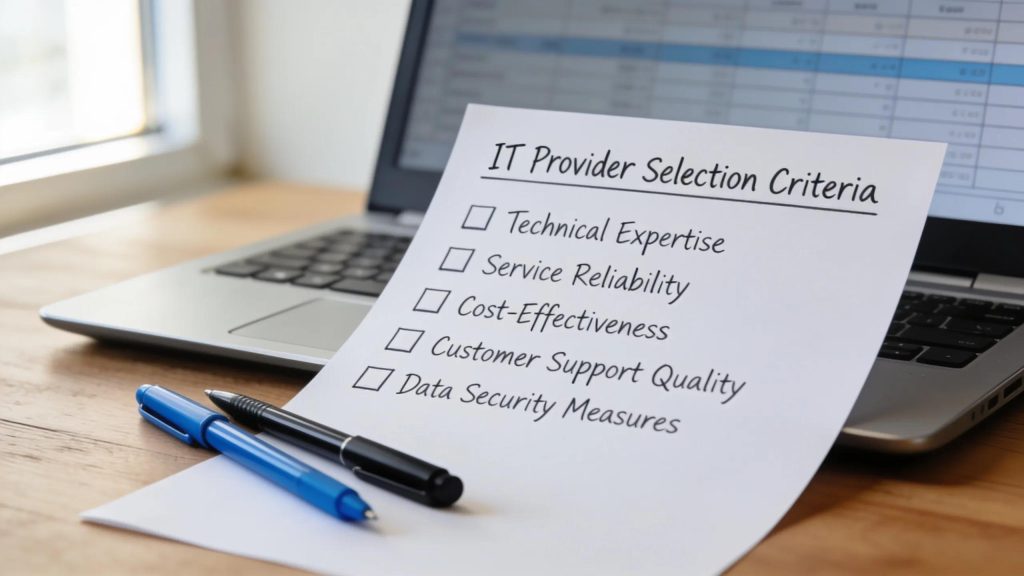
The most important criteria include:
- Service Offerings: Assess the breadth of services provided. A comprehensive IT provider should offer services such as network management, data backup, cybersecurity, help desk support, cloud management, and ongoing monitoring tailored to your specific business needs.
- Industry Experience: Look for providers with a proven track record in supporting businesses similar to yours. Industry experience can translate into a deeper understanding of your compliance requirements, operational risks, employee needs, and technology challenges.
- Customer Support: Evaluate the quality and availability of customer support. Effective communication and fast assistance should be readily accessible, ensuring IT issues are addressed before they disrupt your team.
- Scalability: Choose a provider that can support your business as it grows. A San Jose small business may need basic IT coverage today, but it may require stronger cybersecurity, cloud support, 24/7 assistance, or additional locations in the future.
- Security Focus: Cybersecurity should be part of the core service, not treated as an afterthought. Your provider should help protect your devices, users, email, network, and business data.
Which Experience and Certification Standards Should Providers Meet?
Look for providers that understand data protection, regulatory requirements, and cybersecurity best practices. For businesses handling sensitive information, especially in industries such as healthcare, professional services, finance, or technology, this is especially important.
MotivIT is SOC 2 Type II certified and HIPAA compliant, which helps demonstrate a strong commitment to security, compliance, and data protection. For business owners, this can provide added confidence when choosing a managed IT services provider that will be responsible for supporting critical systems and sensitive information.
How Do Service Level Agreements Define Provider Accountability?
A clear SLA helps your business understand what to expect regarding:
- Response times for support requests
- Uptime expectations
- Escalation processes
- Support hours
- Included services
- Out-of-scope work
- Maintenance schedules
- Security and monitoring responsibilities
What Are the Core Benefits of Outsourcing IT Support to a Managed Services Provider?
Key benefits include:
- Cost Savings: Managed services can help transform unpredictable IT expenses into more predictable monthly costs. This can make budgeting easier and reduce the need to hire, train, and retain a large in-house IT team.
- Access to Expertise: Working with a specialized provider gives your business access to experienced IT professionals who understand infrastructure, security, cloud platforms, support workflows, and technology planning.
- Scalability: Managed services allow you to scale IT resources as your business grows. Whether you add more employees, adopt new software, open another location, or expand remote work, your IT support can adjust with your needs.
- Improved Productivity: Employees can get faster support when technical issues happen, reducing downtime and helping your team stay focused on their work.
- Stronger Security: A managed IT provider can help protect your business with cybersecurity tools, monitoring, patch management, and security best practices.
For San Jose SMBs, outsourcing IT support can be a practical way to gain enterprise-level IT capabilities without the cost of building a full internal department.
How Does Proactive Network Monitoring Enhance Business Continuity?
This predictive maintenance approach helps minimize downtime, protect revenue, and support operational efficiency. Instead of waiting for employees to report slow systems, failed connections, or device issues, proactive monitoring helps identify warning signs earlier.
Proactive network monitoring may include:
- Watching network performance
- Detecting device health issues
- Monitoring servers and workstations
- Identifying unusual activity
- Checking backup status
- Tracking software and patching needs
- Alerting IT teams when something requires attention
For San Jose businesses that depend on email, cloud tools, customer systems, scheduling platforms, or shared files, proactive monitoring can help keep daily operations running smoothly.
Need a more proactive IT support strategy? MotivIT helps San Jose businesses reduce downtime, improve cybersecurity, and keep daily operations running with managed IT services designed for growing teams.
What Cybersecurity and Compliance Services Should Businesses Expect?

Industry data continues to show why cybersecurity should be a priority when choosing an IT support provider. IBM’s 2025 Cost of a Data Breach Report found that the global average cost of a data breach reached $4.44 million, while Verizon’s 2025 Data Breach Investigations Report analyzed more than 22,000 security incidents and over 12,000 confirmed data breaches. For small and mid-sized businesses, these numbers reinforce the importance of having proactive monitoring, endpoint protection, patch management, backup planning, and cybersecurity controls in place before an incident occurs.
A strong managed IT services provider should help protect your business from common threats such as phishing, malware, ransomware, weak passwords, outdated software, unauthorized access, and data loss.
Businesses should expect cybersecurity services such as:
- Advanced Cybersecurity Measures: This may include endpoint protection, firewalls, email security, intrusion detection, threat monitoring, patch management, and access controls.
- Security Audits and Risk Reviews: Regular reviews help identify potential risks, validate security controls, and improve the company’s overall security posture.
- Employee Training: Staff education can significantly reduce risks related to human error, such as phishing attacks, unsafe downloads, or weak password habits.
- Multi-Factor Authentication: MFA helps protect business accounts by requiring more than just a password.
- Backup and Disaster Recovery Planning: Security is not only about preventing threats. Businesses also need a recovery plan if an incident occurs.
- Compliance Support: Businesses in regulated industries may need help meeting data protection, privacy, and industry-specific requirements.
Which Services Are Typically Included in Managed IT Offerings by San Jose Providers?
Below is a comparison of common services and their benefits.
| Service | Description | Key Benefit |
|---|---|---|
| Proactive IT Monitoring | Continuous oversight of IT systems, devices, and networks | Quick detection of issues, reduced downtime, and stronger system reliability |
| Help Desk Support | Technical assistance available to employees | Improved productivity with timely support for common IT issues |
| Cloud Solutions Management | Management of cloud services, storage, access, and infrastructure | Scalability, cost-efficiency, secure access, and improved collaboration |
| Cybersecurity Protection | Security tools and processes to protect users, devices, and data | Reduced risk from malware, phishing, unauthorized access, and data loss |
| Backup and Disaster Recovery | Data backup planning and recovery support | Faster recovery from outages, accidental deletion, or cyber incidents |
| Patch Management | Regular updates for software and systems | Fewer vulnerabilities and better system performance |
| Vendor and Asset Management | Support for technology vendors, devices, and IT assets | Better organization, cost control, and easier IT planning |
This comparison illustrates how diverse service offerings can provide critical support to businesses in San Jose. A strong provider should not only offer these services but also explain how each one supports your specific business operations.
What Role Do Cloud Integration and Help Desk Support Play in Managed IT?
For San Jose businesses with hybrid teams, remote employees, multiple locations, or cloud-based workflows, cloud support can help improve flexibility and productivity.
A managed IT provider can help with:
- Microsoft 365 support
- Cloud storage access
- Email management
- User permissions
- Secure file sharing
- Cloud backup
- Device access
- Collaboration tools
- Cloud security settings
Together, cloud integration and help desk support create a stronger, more flexible IT environment for growing businesses.
How Does Business Process Outsourcing Complement Managed IT Services?
This combination can lead to greater operational efficiency and access to specialized skills without the overhead of full-time hires. BPO can also help businesses improve agility by freeing up internal resources for strategic tasks.
For example, a growing business may need managed IT support to keep systems secure and reliable, while also needing help with administrative work, customer support, data entry, technical support, or back-office operations.
For comprehensive IT and business solutions, providers like MotivIT can support both sides of the business: the technology infrastructure and the operational support needed to keep work moving.
This is especially useful for SMBs that want to scale without overloading their internal team.
How Can Business Owners Effectively Compare and Select Top IT Service Providers in San Jose?
Consider the following during your selection process:
- Criteria for Evaluation: Establish clear metrics for assessment based on your specific needs. Consider support availability, cybersecurity, response times, pricing, service scope, and scalability.
- Research Methods: Review testimonials, case studies, service pages, certifications, and client feedback to gauge provider reliability and performance.
- Key Questions to Ask: Inquire about their experience, range of services, support process, security tools, escalation process, pricing model, and approach to customer support.
- Business Fit: Look for a provider that understands your operations and can explain services in business terms, not only technical terms.
- Long-Term Value: Consider whether the provider can support your future growth, not just your current IT challenges.
Questions to Ask Before Choosing a Provider
Before making a final decision, ask potential providers questions such as:
- What services are included in your managed IT plans?
- Do you provide proactive monitoring and maintenance?
- What cybersecurity protections are included?
- What are your support hours?
- How quickly do you respond to urgent requests?
- Do you support Microsoft 365 and cloud tools?
- Do you provide backup and disaster recovery planning?
- How do you handle service tickets?
- What is included in the monthly price?
- Are there additional fees for project-based work?
- Can your services scale as our business grows?
Clear answers can help you determine whether the provider is prepared to support your business properly.
What Pricing Models and Transparency Should Be Expected from Providers?
Common models include:
- Flat-Rate Pricing: A fixed monthly fee for a defined package of services.
- Tiered Pricing: Services offered at different levels based on support needs, cybersecurity requirements, and included features.
- Per-User Pricing: Pricing based on the number of users supported.
- Per-Device Pricing: Pricing based on the number of devices supported.
- Project-Based Pricing: Additional pricing for work outside the regular managed IT agreement.
A good provider should be able to explain the difference between service levels and help you choose the plan that matches your current needs without overcomplicating the decision.
MotivIT Managed IT Service Plans at a Glance
MotivIT offers flexible managed IT service plans designed for different business needs, from basic IT support to full-service, security-focused coverage. This allows small and growing businesses to choose a plan based on team size, support needs, cybersecurity requirements, and long-term growth goals.
| Plan | Best For | Key Benefits |
|---|---|---|
| Essentials | Small businesses that need basic IT coverage | Core device support, cybersecurity basics, support hours, monitoring, maintenance, and client portal access |
| Foundation | Growing businesses that need broader IT support | Adds Microsoft 365 Business Standard, vendor and asset management, unlimited network devices, unlimited service requests, and business reviews |
| Enhanced | Businesses that need stronger cybersecurity | Includes advanced cybersecurity tools, email protection, security training, vulnerability management, disaster recovery planning, and dedicated account management |
| Complete | Businesses that need full-service IT coverage | Includes 24/7 support, Microsoft 365 Business Premium, endpoint detection and response, phishing campaigns, and advanced security support |
How Do Client Success Stories and Case Studies Inform Provider Reliability?
When reviewing case studies or testimonials, look for details such as:
- What problem the client needed to solve
- What services were provided
- How the provider supported the business
- What measurable improvements were achieved
- How responsive and reliable the provider was
- Whether the provider supported long-term growth
Evaluating testimonials also sheds light on customer satisfaction and the level of support provided. While every business is different, success stories can help confirm whether the provider has experience solving the types of IT challenges your company may face.
Frequently Asked Questions About Managed IT Services Providers in San Jose
What does a managed IT services provider do?
A managed IT services provider helps businesses manage, monitor, secure, and support their technology environment. This can include help desk support, cybersecurity protection, network monitoring, cloud support, software updates, backup planning, and IT strategy.
Why should a small business use managed IT services?
Small businesses use managed IT services to reduce downtime, improve cybersecurity, access expert IT support, and avoid the cost of hiring a full internal IT team. It also gives business owners a more predictable way to manage technology expenses.
How do I choose the best managed IT services provider in San Jose?
What should be included in a managed IT services plan?
A strong managed IT services plan may include help desk support, network monitoring, cybersecurity protection, patch management, backup and disaster recovery planning, Microsoft 365 support, cloud management, vendor support, and regular business reviews.
Is managed IT support better than hiring in-house IT staff?
For many small and growing businesses, managed IT support can be more cost-effective than hiring a full internal IT team. It gives businesses access to a broader team of specialists while keeping IT costs more predictable.
Does MotivIT provide managed IT services in San Jose?
Yes. MotivIT provides managed IT services in San Jose for businesses that need reliable IT support, stronger cybersecurity, proactive monitoring, and scalable technology solutions.
Choose a Managed IT Services Provider That Supports Your Business Goals
With scalable plans, cybersecurity-focused support, and broader IT and BPO capabilities, MotivIT can help businesses build a more secure, reliable, and efficient technology environment.
Contact MotivIT today to learn how managed IT services in San Jose can help your business stay secure, productive, and ready for growth.
Ready to choose a managed IT partner with confidence?
Let MotivIT help you find the right IT support plan for your business, from proactive monitoring and cybersecurity to scalable managed services built for growth.