


Has IT Outsourcing Worked? Measuring the Real Impact of Managed IT Support

How Effective Is IT Outsourcing? A Close Look
Proven Benefits of Outsourced IT Management for Enterprises

Outsourced IT management delivers several practical benefits that improve productivity and free internal teams to focus on strategic priorities. Key advantages include:
- Cost savings: Outsourcing reduces costs tied to salaries, training, and infrastructure by shifting fixed expenses to variable, service-based pricing.
- Access to expertise: External providers bring specialized skills and up-to-date best practices that can be hard to recruit and retain in-house.
- Operational efficiency: Offloading non-core IT tasks lets internal teams concentrate on high-value work, accelerating decision-making and delivery.
How Managed IT Support Cuts Costs and Boosts Efficiency
- Predictable costs: Fixed-fee managed services make IT spending easier to forecast and help avoid expensive emergency fixes.
- Proactive support: Continuous monitoring and upkeep identify problems before they escalate, improving uptime and reducing business disruption.
- Enhanced security: Managed offerings commonly include cybersecurity controls that lower the risk of breaches and strengthen operational integrity.
Remote IT Services: The Backbone of Scalable Outsourcing
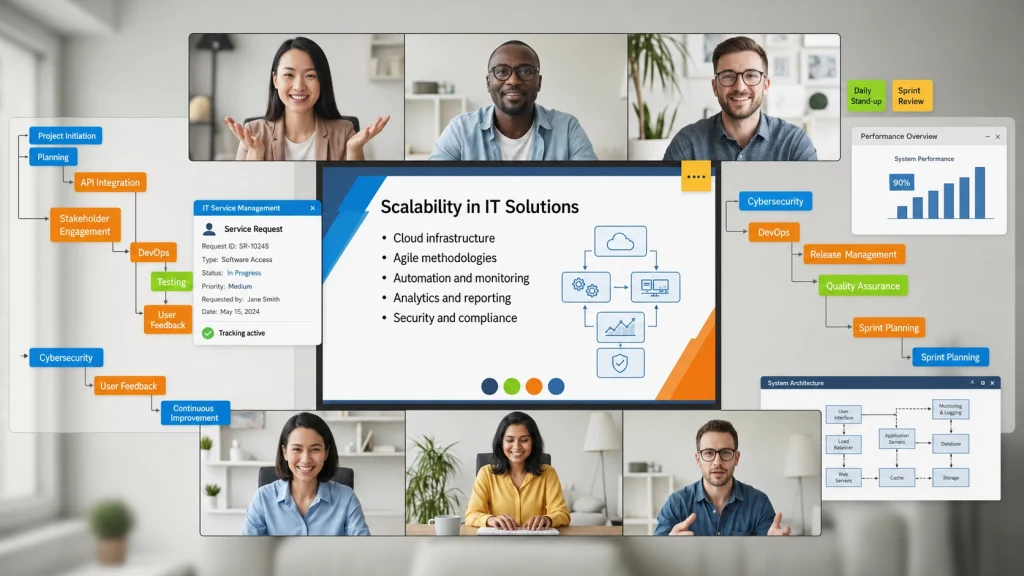
- Scalability: You can ramp resources up or down to match demand without the overhead of adding office space or headcount.
- Cost efficiency: Pay-for-what-you-use models help control spending and avoid idle resources.
- Technical support: Remote teams provide continuous troubleshooting and maintenance, keeping operations running across time zones and locations.
Choosing Reliable IT Outsourcing Providers for Better Outcomes
Selecting the right partner is essential for achieving the expected benefits of outsourcing. Look for providers that demonstrate these qualities:
- Proactive management: Providers should prevent issues before they disrupt your business, not just respond to incidents.
- Tailored solutions: Effective vendors tailor their services to your industry, scale, and operational needs rather than offering one-size-fits-all packages.
- Strong communication: Clear, frequent communication ensures alignment on goals, timelines, and expectations.
Criteria That Define Effective IT Outsourcing Partnerships
Successful partnerships share a few consistent traits:
- Proactive management that prevents small problems from becoming major outages.
- Tailored solutions designed to meet each organization’s unique requirements.
- Strong communication that keeps stakeholders informed and projects on track.
Why Regional Expertise—Like Silicon Valley—Matters in IT Outsourcing
Regional know-how can be a real differentiator, especially when providers are rooted in technology hubs such as Silicon Valley. That advantage shows up in several ways:
- Local market dynamics: Firms familiar with local customers and industries can craft solutions that better fit market expectations.
- Speed of service: Proximity and familiar networks often enable faster deployment and more responsive support.
- Compliance considerations: Local expertise helps ensure outsourced services comply with regional regulations and industry standards.
Key Challenges and How to Mitigate Risks in IT Outsourcing
- Operational risks: Concerns around data security, third-party dependence, and service reliability need careful oversight.
- Cultural differences: Cross-border teams can face communication gaps and differing work styles that affect delivery.
- Quality control: Ensuring consistent service quality across locations requires robust monitoring and governance.
Common Operational Risks in Outsourced IT
- Data security issues: The potential for breaches or unauthorized access can threaten confidentiality and integrity.
- Vendor reliability: Make sure partners have a proven history of consistent, high-quality delivery.
- Dependence on providers: Relying too heavily on a single provider can create exposure if that vendor faces disruptions.
How SLAs Help Manage Outsourcing Risk
- Performance metrics: Define measurable standards so you can track and enforce service levels.
- Penalty clauses: Include consequences for unmet obligations to keep providers accountable.
- Regular review processes: Schedule ongoing reviews of SLA performance to catch issues early and adjust expectations as needs change.
Evidence Behind IT Outsourcing: Case Studies and Market Trends
Partner with MotivIT to Transform Your Business Technology
Read the articles
June 03, 2026
Managed IT Services Support: Enhancing Business IT Solutions and Outsource Support
November 26, 2025
Work-Life Balance for the Entrepreneur: Reclaiming Your Personal Time with a VA
Ready to start your journey into digital transformation?
Contact us today to see how our experts can help advance your business.